
McLean, Virginia, sits at the intersection of historic charm and modern luxury, and its homes reflect that dual character. Whether you’re updating a mid-century split-level or expanding a colonial in Langley, remodeling in Fairfax County comes with its own set of considerations, from strict zoning overlays to materials that can handle humid summers and freezing winters. This guide walks homeowners through the most common renovation projects, permitting realities, and budget planning specific to McLean’s market and regulatory environment in 2026.
Table of Contents
ToggleKey Takeaways
- Home remodeling in McLean, VA is strategically timed in 2026 due to stabilized interest rates, moderate material costs, and new stormwater compliance requirements that make bundling projects cost-effective.
- Kitchen renovations deliver the highest ROI in McLean’s market, ranging from $35,000–$65,000 for cosmetic updates to $80,000–$150,000+ for full gut renovations with structural changes.
- Fairfax County’s strict permitting rules require permits for structural, electrical, plumbing, and HVAC work, plus zoning compliance for lot coverage and setbacks—plan for thorough inspections at rough-in, insulation, and final stages.
- Bathroom remodels benefit from curbless walk-in showers, heated tile floors, and proper exhaust ventilation ($400–$800 additional cost) to prevent mold in McLean’s humid climate.
- Budget 15–20% contingency for hidden issues common in older McLean homes, such as outdated wiring, undersized joists, or asbestos, and get at least three detailed quotes from licensed contractors with local experience.
Why McLean Homeowners Are Choosing to Remodel Now
Several converging factors make 2026 a strategic time for home renovations in McLean. Interest rates have stabilized after years of volatility, making home equity lines of credit (HELOCs) more predictable for financing larger projects. Homeowners who bought or refinanced during the 2020-2021 low-rate window now have substantial equity to tap without selling.
The local real estate market remains competitive, with inventory still tight in desirable neighborhoods like Chain Bridge Forest and Westmoreland Hills. Remodeling offers a way to stay in place while gaining the features buyers want, open floor plans, primary suites, and updated kitchens, without competing in a seller’s market or paying relocation costs.
Material costs have also moderated. Lumber prices dropped from pandemic highs, and supply chains for cabinetry, appliances, and fixtures have stabilized. Lead times that stretched six months in 2022 are now closer to standard 8-12 weeks for most custom orders.
Fairfax County’s updated stormwater management regulations (effective January 2025) mean older homes require compliance upgrades during major renovations. Tackling those requirements now, while already managing permits and contractors, makes financial sense. Projects involving roof replacements, additions, or significant grading often trigger stormwater reviews, so bundling compliance work avoids duplicate permitting fees and site mobilization costs down the line.
Most Popular Home Remodeling Projects in McLean
Kitchen Renovations That Add Value
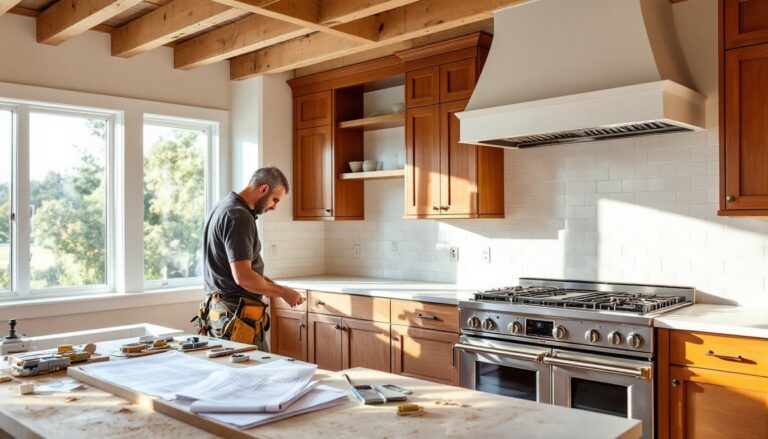
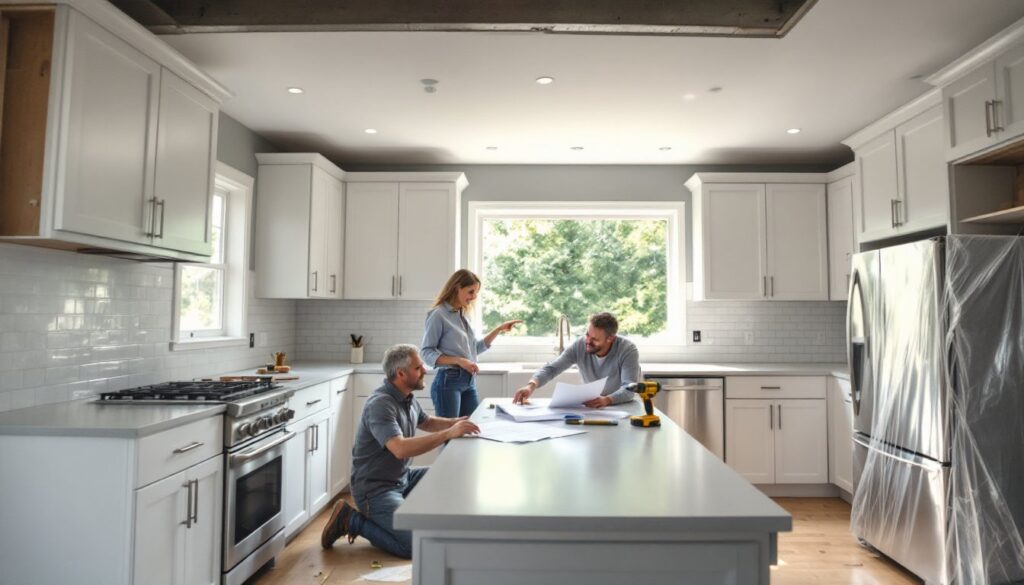
Kitchen remodels consistently deliver the highest return on investment in McLean’s upper-tier market. Most projects fall into two categories: cosmetic updates (cabinets, countertops, backsplash, appliances) and full gut renovations that relocate plumbing, knock out walls, or add square footage.
Cosmetic updates typically run $35,000-$65,000 and involve refacing or replacing cabinets, installing quartz or quartzite countertops, upgrading to panel-ready appliances, and adding recessed lighting. Popular choices include shaker-style cabinets in white or navy, Caesarstone or Cambria quartz in neutral tones, and integrated Sub-Zero or Thermador appliances. These projects rarely require structural permits but do need electrical and plumbing sign-offs if you’re moving fixtures or adding circuits.
Full gut renovations start around $80,000 and climb past $150,000 for high-end finishes and layout changes. Removing a wall between the kitchen and dining room, common in 1970s-era McLean homes, requires a structural engineer’s assessment if it’s load-bearing. Expect to sister joists, install a steel beam (typically a W8x10 or W10x12 for residential spans under 12 feet), and obtain permits from Fairfax County’s Department of Planning and Development.
Flooring choices matter in McLean’s climate. Engineered hardwood handles humidity swings better than solid oak, and luxury vinyl plank (LVP) works well in eat-in kitchen zones prone to spills. Skip marble in high-traffic kitchen areas, it etches easily and shows wear.
Many homeowners integrate smart home features: touchless faucets, under-cabinet lighting on motion sensors, and Wi-Fi-enabled appliances. Plan for additional electrical circuits (kitchens need at least two 20-amp small appliance circuits per NEC 210.52(B)), and budget for a dedicated 240V line if upgrading to an induction range.
Bathroom Upgrades for Modern Living
Bathroom renovations in McLean focus heavily on primary suites and powder rooms. The average 5×8-foot bathroom remodel costs $18,000-$32,000, while expanding into adjacent closet space or reconfiguring a primary suite runs $50,000-$90,000.
Key upgrades include replacing tub-shower combos with curbless walk-in showers (requires sloping the subfloor and a linear drain), installing heated tile floors, adding double vanities, and upgrading to low-flow fixtures that meet EPA WaterSense standards. Frameless glass enclosures and wall-mounted toilets are popular in contemporary remodels.
Tile selection drives both cost and longevity. Porcelain tile rated for wet areas (look for a PEI rating of 3 or higher) runs $6-$18 per square foot installed. Large-format tiles (12×24 or larger) reduce grout lines and create a cleaner look, but require a perfectly flat substrate, plan for self-leveling compound or a mortar bed if your subfloor isn’t dead flat.
Ventilation is non-negotiable in McLean’s humid climate. Install an exhaust fan rated for the room’s cubic footage (CFM = room volume ÷ 7.5 for bathrooms). Mount it to vent outside, not into the attic, and use insulated ductwork to prevent condensation. According to bathroom remodel cost guides, these ventilation upgrades often add $400-$800 but prevent mold and moisture damage.
Plumbing access in multi-story homes can complicate projects. If the bathroom sits over finished living space, cutting into ceilings below to reroute drains adds labor and drywall repair costs. Whenever possible, keep fixtures in roughly the same locations to avoid expensive plumbing runs.
Understanding McLean’s Permitting and Zoning Requirements
Fairfax County enforces strict permitting and zoning rules, and McLean sits within multiple zoning districts, R-2, R-3, R-E (residential estate), and several historic overlay zones. Homeowners need to understand which work requires permits and how zoning affects allowable square footage, setbacks, and lot coverage.
Permits are required for:
- Structural changes (removing or adding walls, cutting into floor joists or rafters)
- Electrical work beyond replacing fixtures (new circuits, panel upgrades, recessed lighting)
- Plumbing alterations (moving drains, adding bathrooms, gas line work)
- HVAC installation or ductwork modifications
- Additions, dormers, and finished basements
- Decks over 30 inches in height or attached to the house
- Window and door replacements that alter rough openings
Cosmetic work that typically doesn’t require permits includes painting, flooring replacement (as long as you’re not altering the subfloor), cabinet installation, and trim work.
Fairfax County uses an online permit portal, but expect in-person inspections at rough-in, insulation, and final stages. Inspectors are thorough, exposed framing must meet current code even if the original construction was grandfathered. That means adding fire blocking in stud bays, upgrading outlet spacing to every 12 feet per NEC 210.52, and ensuring proper header sizing over new window openings.
Zoning considerations become critical for additions. McLean’s R-2 and R-3 zones limit lot coverage (typically 25-35% including house, garage, and hardscape) and require setbacks from property lines, often 25-40 feet from the front, 12-20 feet from sides, and 25-35 feet from the rear. Many remodeling project planning tools offer lot coverage calculators, but hiring a surveyor to verify existing conditions before designing an addition avoids costly redesigns.
Historic overlay districts (like parts of Langley) add another layer. Exterior changes visible from the street may require Board of Architectural Review (BAR) approval. Allow 4-6 weeks for BAR review and be prepared to submit detailed elevation drawings and material samples.
Tree protection ordinances also apply. Removing any tree over 20 inches in diameter (measured at 4.5 feet above grade) requires a permit. If your remodel involves grading, drainage, or an addition near mature trees, budget for a tree preservation plan and protective fencing during construction.
Budgeting Your McLean Home Remodeling Project
McLean’s proximity to D.C. and high cost of living translates to above-average remodeling costs. Labor rates for licensed contractors run $75-$125 per hour for skilled trades (electricians, plumbers, HVAC), and general contractors typically charge 15-25% over hard costs for project management.
Typical project budgets in 2026:
- Minor kitchen update: $25,000-$50,000
- Major kitchen remodel: $75,000-$150,000+
- Full bathroom renovation: $20,000-$40,000
- Primary suite addition: $120,000-$200,000
- Basement finishing (1,000 sq ft): $40,000-$80,000
- Whole-house window replacement (20-25 windows): $15,000-$30,000
Material costs vary widely based on selection. Builder-grade cabinetry runs $150-$300 per linear foot installed, while custom or semi-custom options hit $500-$1,200 per linear foot. Countertops range from $40/sq ft for basic quartz to $150+/sq ft for exotic quartzite or marble.
Financing options include cash, HELOCs, home equity loans, and cash-out refinances. HELOCs offer flexibility, draw funds as needed and pay interest only on the amount used, but carry variable rates. Home equity loans provide fixed rates and predictable payments but require taking the full amount upfront. As of April 2026, HELOC rates in the D.C. metro hover around 7-9%, while fixed home equity loans run 7.5-9.5%.
Always pad the budget by 15-20% for contingencies. Older McLean homes often hide surprises: outdated knob-and-tube wiring, undersized floor joists, asbestos tile, or hidden water damage. Once walls are open, code compliance issues surface, undersized or ungrounded electrical boxes, improper venting, lack of fire blocking, that must be addressed before passing inspection.
Get at least three detailed quotes from licensed contractors. Verify they carry general liability and workers’ compensation insurance and check references on recently completed projects in McLean. According to home improvement cost estimators, detailed line-item quotes prevent scope creep and change order disputes.
Timing affects costs too. Contractors book up in spring and fall, so scheduling projects in late winter or mid-summer may yield better rates and availability. Material lead times still factor in, custom cabinetry, special-order tile, and high-end appliances can take 10-16 weeks, so order early to avoid delaying your project timeline.
Conclusion
Remodeling in McLean requires balancing design ambitions with Fairfax County’s regulations, market-specific material choices, and realistic budgets. Start with a clear scope, confirm permitting requirements early, and choose contractors with local experience navigating McLean’s zoning and inspection process. Done right, a well-planned remodel adds comfort, functionality, and long-term value.