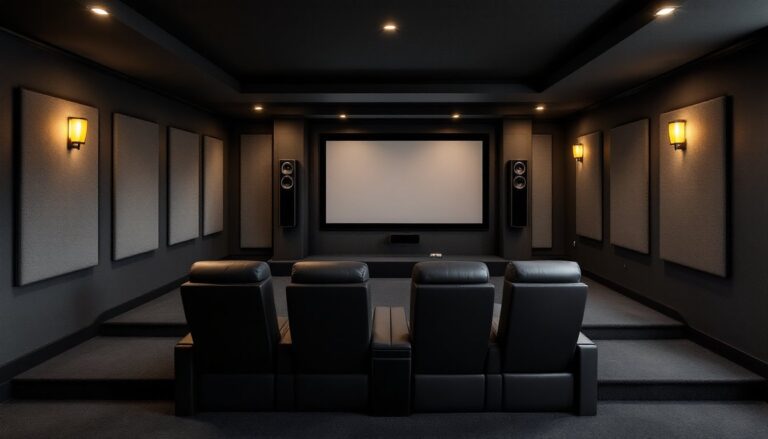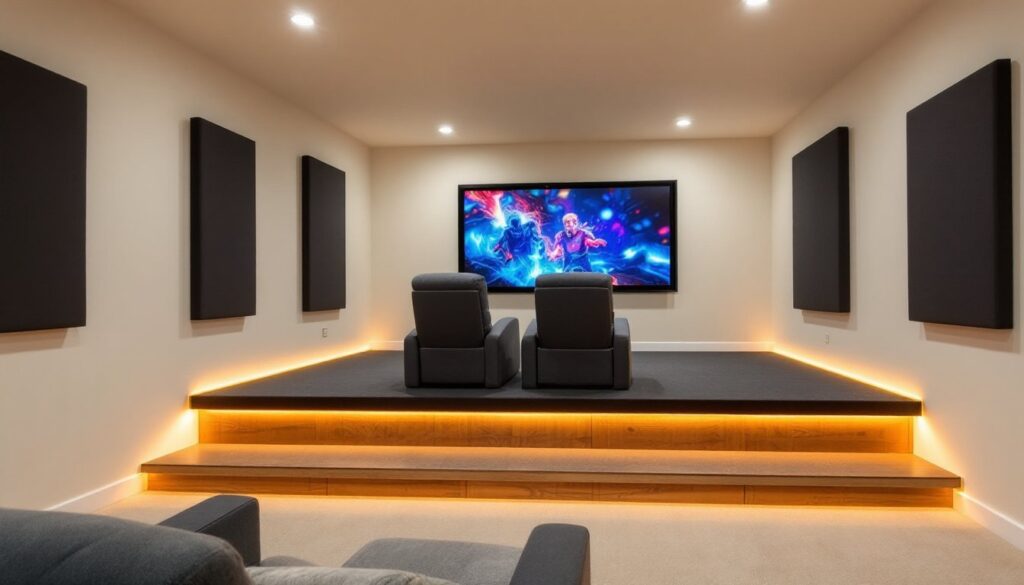

Ever settled into your home theater only to realize the back row can barely see over the heads in front? Or noticed how your expensive screen feels wasted when half the room has a compromised viewing angle? Home theater risers fix that problem. They’re elevated platforms that create tiered seating, giving everyone in the room a clear sightline and a more immersive experience. Whether you buy pre-built units or build your own, risers turn a cramped media room into something that feels like an actual theater. And if you’re handy with a circular saw and a drill, they’re more approachable than most people think.
Key Takeaways
- Home theater risers solve poor sightlines by creating tiered, stadium-style seating that ensures every viewer has an unobstructed view of the screen regardless of their row position.
- Pre-built riser platforms cost $400–$800 per section and install in 1–2 hours with minimal tools, while DIY custom-built risers typically cost $150–$300 in materials and offer greater flexibility for odd room dimensions.
- A properly framed home theater riser with 16-inch joist spacing and ¾-inch decking can safely support 50 pounds per square foot, accommodating even heavy motorized recliners and sectional sofas.
- The ideal riser height is typically 8–10 inches for most home setups, calculated by measuring your front-row seating headrest height and adding 4–6 inches for proper eye-level elevation.
- Beyond sightlines, home theater risers improve acoustic performance by positioning listeners at optimal heights relative to speakers and provide a cavity to conceal speaker wire, cables, and bass shakers for enhanced immersion.
- Most jurisdictions don’t require permits for residential risers under 30 inches that aren’t permanently fastened to the building, but checking with your local building department is recommended before construction begins.
What Are Home Theater Risers and Why Do You Need Them?
A home theater riser is essentially a sturdy platform built to elevate one or more rows of seating. They’re typically constructed from 2×4 or 2×6 framing with a plywood deck and can range from a single 8-inch step to multi-tiered platforms over 12 inches high.
The main reason to install risers is sightline optimization. In a flat-floor setup, viewers in the back row are looking at the backs of heads instead of the screen. Risers create a stadium-style rake, ensuring everyone has an unobstructed view. This is especially critical if your screen is mounted low or if you’re using recliners with high headrests.
Beyond sightlines, risers improve acoustic performance. Elevated seating positions listeners at different heights relative to speakers, which can help balance sound distribution in the room. Many serious home theater builders also use the riser cavity to run speaker wire, subwoofer cables, or even install tactile transducers (bass shakers) directly into the platform for added immersion.
Finally, risers add a polished, intentional look to a dedicated media room. They signal that the space is purpose-built, not just a living room with a big TV.
Types of Home Theater Risers: Finding the Right Fit for Your Space
Pre-Built Riser Platforms
Pre-fabricated risers are modular units designed for quick installation. Companies like ProAudio and Riser Solutions sell platforms in standard sizes (commonly 8, 10, or 12 inches tall) with carpeted tops and finished sides. They’re typically constructed from MDF or plywood with internal bracing and ship flat-packed or partially assembled.
Pros: No cutting, no framing, minimal tools required. Installation usually takes an hour or two with basic hand tools. Many models include integrated cable pass-throughs and knockouts for wiring. Great for renters or anyone who wants a clean look without committing to a permanent build.
Cons: Higher upfront cost, expect to pay $400–$800 per riser section depending on size and finish. Limited customization for odd room dimensions or non-standard seating layouts. Weight capacity is fixed, so double-check specs if you’re installing heavy recliners.
DIY Custom-Built Risers
Building your own riser from framing lumber and sheet goods gives you total control over dimensions, height, and features. Most DIY designs use a 2×4 stud frame on 16-inch centers with ¾-inch plywood or OSB decking. The structure is identical to building a low deck or platform bed.
Pros: Cost-effective, materials for a single-row riser typically run $150–$300 depending on size and lumber prices. You can match exact room dimensions, add custom features like storage drawers, lighting, or built-in subwoofer cavities. Structurally, a well-built DIY riser can handle more weight than most commercial units.
Cons: Requires moderate carpentry skills, a few power tools (circular saw or miter saw, drill, square), and a full day of work for a first-timer. Finishing (carpet, paint, trim) adds time and cost. If your room has unlevel floors, you’ll need to shim the base frame, which adds complexity.
How to Build Your Own Home Theater Riser: A Step-by-Step Guide
Materials & Tools
Lumber:
- 2×4 studs (quantity depends on riser dimensions: figure one stud every 16 inches on center for joists, plus perimeter framing)
- ¾-inch plywood or OSB for decking (one 4×8 sheet covers 32 square feet)
- 2×6 or 2×8 boards if building a taller riser (over 12 inches) for added rigidity
Fasteners:
- 3-inch deck screws or structural screws for framing
- 1¼-inch screws for attaching decking
Tools:
- Circular saw or miter saw
- Cordless drill/driver
- Speed square and tape measure
- Level (4-foot recommended)
- Safety glasses and hearing protection
Steps
-
Measure and plan the layout. Determine riser footprint based on seating width and depth. A typical single-row riser for two recliners is 8 feet wide by 4 feet deep. Decide on height: 8 inches works for most rooms: 10–12 inches is better for larger screens or third-row seating. For beginner woodworking projects, sketching a cut list before buying lumber saves time and reduces waste.
-
Cut the frame components. Cut two long 2×4 base plates to match riser length, and two short plates for width. Cut joists to span the depth, spaced 16 inches on center. If building a 12-inch riser, consider doubling up studs or using 2×6 material for the vertical supports.
-
Assemble the base frame. Lay out the perimeter rectangle on the floor. Fasten corners with 3-inch screws, two per joint. Use a speed square to keep corners at 90 degrees. Install interior joists between the long sides, securing each with two screws through the rim joist (toe-screwing or using joist hangers both work).
-
Add vertical supports. Cut 2×4 legs to your target height minus the thickness of the base plate and decking (usually 1½ inches total). Attach one leg at each corner and at every joist location. Check for level as you go, shim under the base frame if your floor slopes.
-
Install the top plate and decking. Run a top plate around the perimeter, screwing down into the leg tops. Lay your ¾-inch plywood over the frame and fasten every 8 inches along joists with 1¼-inch screws. If using multiple sheets, stagger seams and ensure seams land on a joist.
-
Finish the riser. Options include gluing down carpet (easiest with indoor/outdoor carpet and spray adhesive), painting the plywood and adding edge trim, or wrapping the front and sides with ¼-inch hardboard or MDF for a clean look. Run any speaker or power cables through the frame before finishing, drill pass-through holes in the base plate.
Safety note: Wear eye protection when cutting and hearing protection if using a miter saw. If fastening into concrete (basement installs), use a hammer drill and Tapcon screws to anchor the base frame.
Design Considerations for Maximum Comfort and Viewing Angles
Riser Height and Sightlines
The goal is to position each row’s eye level above the row in front. A 12-inch rise per row is standard in commercial theaters, but home setups often work fine with 8–10 inches due to closer seating distances. To calculate ideal height, measure from the floor to the top of the headrest on your front-row seating, then add 4–6 inches. That’s your target platform height.
Depth and Seating Layout
Plan riser depth to match your seating footprint plus a few inches of clearance. Most recliners need 40–50 inches of depth when fully extended. If you’re placing a sofa on the riser, measure the actual furniture and add 6 inches behind for wall clearance and cable access.
Structural Load Capacity
A properly framed riser with joists on 16-inch centers and ¾-inch decking can easily support 50 pounds per square foot, which covers even the heaviest theater recliners. If you’re installing multiple motorized recliners or a large sectional, consider upgrading to 2×6 joists or reducing joist spacing to 12 inches.
Acoustic and Vibration Isolation
For serious enthusiasts, decoupling the riser from the floor reduces vibration transfer to the room below. Lay down rubber isolation pads or dense foam strips under the base frame. Some builders also install bass shakers (like the ButtKicker or Dayton Audio models) directly into the riser frame, wired to the subwoofer channel for tactile feedback during explosions and bass-heavy scenes. Many home automation guides cover integration of these transducers with AV receivers.
Lighting and Safety
LED strip lighting installed along the riser front edge improves safety and adds ambiance. Use low-voltage strips (12V) with a motion sensor or dimmer tied to your room lighting control. If your riser is over 10 inches tall, consider adding a handrail or grip bar on one side, especially for elderly users or kids.
Code and Permit Notes
Most jurisdictions don’t require permits for non-structural platforms under 30 inches in height that aren’t permanently fastened to the building. But, if you’re altering floor joists, running new electrical circuits for outlets on the riser, or building a multi-level platform over 30 inches, check with your local building department. Guardrail requirements (typically anything over 30 inches) are outlined in the International Residential Code (IRC). When in doubt, call your local inspector before you build, most are happy to answer questions and it beats tearing out work later.
Conclusion
Home theater risers aren’t just a luxury, they’re a practical upgrade that solves real sightline and acoustic issues. Whether you go with a pre-built platform or spend a weekend building your own, the result is a more immersive, comfortable viewing experience for everyone in the room. Measure carefully, frame solid, and don’t skip the finish work. Your media room will thank you.