
Dedicated home theaters have moved beyond simple screen-and-sound setups. Today’s homeowners expect true cinematic comfort, the kind that rivals or beats commercial theaters. Palliser, a Canadian furniture manufacturer with over 75 years of experience, has become a benchmark in premium theater seating. Their chairs combine ergonomic design, durable construction, and configurable layouts that work in spaces ranging from compact basement conversions to purpose-built screening rooms. This guide breaks down what makes Palliser a go-to brand, which collections deliver the best value, and how to spec and install these seats correctly.
Table of Contents
ToggleKey Takeaways
- Palliser home theater seating combines North American manufacturing, kiln-dried hardwood frames, and modular configurations that rival commercial cinema comfort at $1,200–$3,500 per seat.
- The Pacifico series suits contemporary rooms with sightline concerns due to its low 39-inch backrest, while the Flicks series delivers classic theater aesthetics with taller backrests and deeper cushions for extended viewing sessions.
- Power recline with memory presets, integrated cooling/heating elements, and modular power distribution with Class 2 circuits simplify installation and meet electrical codes without field modifications.
- Proper floor preparation, two-person assembly with finger-tight bolts, and dedicated 15-amp circuits (2+ for six-seat rows) ensure stable, code-compliant installations that protect your investment.
- Test all powered features on-site before finalizing placement, measure reclined footprints (65–72 inches), and allow 36-inch aisles for accessibility to maximize comfort and longevity in your home theater.
Why Palliser Leads the Home Theater Seating Market
Palliser built its reputation on domestic manufacturing and quality control. Unlike many competitors that source overseas, Palliser operates production facilities in North America, which translates to tighter tolerances, faster lead times, and easier warranty service.
Their frames use kiln-dried hardwood and engineered lumber, not particleboard. Joints are corner-blocked and glued, then reinforced with staples, construction methods borrowed from high-end residential furniture. The result is seating that holds up under daily use without creaking or sagging.
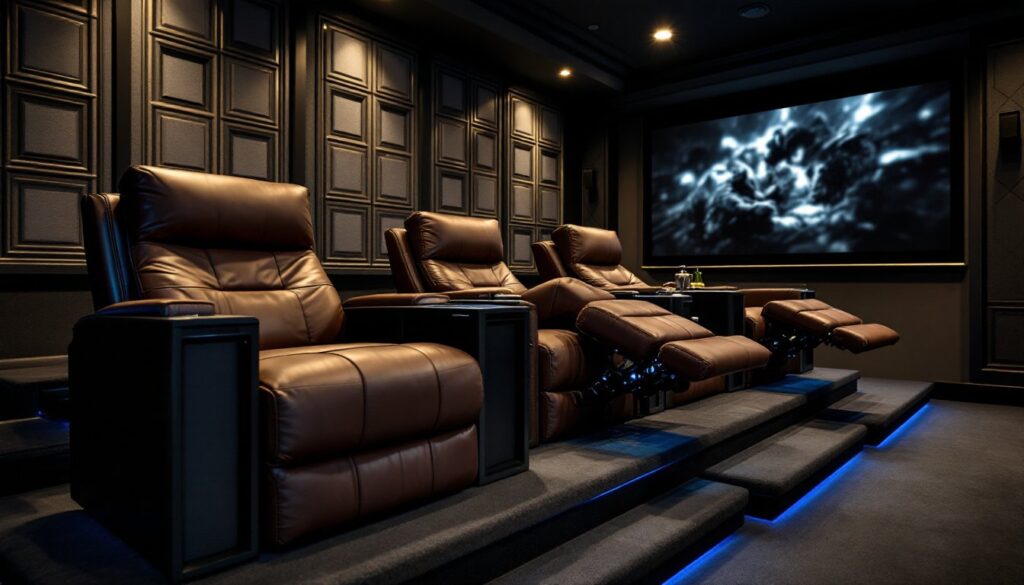
Palliser also offers modular configurations. Rows can include straight seats, wedges for curved layouts, and storage consoles. Most collections support power recline, USB charging ports, and integrated ambient lighting. These aren’t afterthoughts, wiring harnesses and transformers are factory-installed, reducing the risk of field errors during setup.
Another advantage: customization depth. Buyers can choose from dozens of leather and fabric options, select arm styles, adjust headrest height, and add features like articulating headrests or tactile transducers (bass shakers). This level of tailoring is uncommon at Palliser’s price point, which typically ranges from $1,200 to $3,500 per seat depending on configuration and upholstery.
Top Palliser Home Theater Seating Collections to Consider
Palliser’s product line includes over a dozen seating families. Two collections stand out for performance, availability, and user feedback.
Pacifico Series: Modern Luxury Meets Functionality
The Pacifico series is Palliser’s flagship for contemporary home theaters. Seats feature track arms with minimal taper, a low-profile backrest, and slim storage consoles that don’t crowd narrow rooms.
Key specs include:
- Seat width: 22 inches (measured at the narrowest point of the cushion)
- Recline mechanism: Dual-motor power recline with independent backrest and legrest control
- Weight capacity: 300 pounds per seat
- Upholstery: Top-grain leather or performance fabric (treated for stain resistance)
The Pacifico works well in spaces where sightlines matter. Its lower backrest height (39 inches when upright) won’t block projector throw in rooms with rear or ceiling-mounted units. Armrest cupholders are molded, not bolt-on accessories, which keeps the design clean.
One practical note: the Pacifico’s power supply requires dedicated 15-amp circuits. If you’re wiring a four-seat row, plan for at least two circuits to avoid tripping breakers when all motors engage simultaneously.
Flicks Series: Classic Theater Experience
For those who want the traditional cinema look, the Flicks series delivers. It features tall, wing-style backrests (up to 44 inches), rolled arms, and deeper cushions (21-inch seat depth vs. 19 inches on the Pacifico).
This collection prioritizes comfort for long viewing sessions. The lumbar support is more pronounced, and the seat cushions use high-resiliency foam (1.8-pound density) rather than softer memory foam, which can bottom out over time.
Flicks seats are bulkier, expect each unit to consume about 26 inches of width, including armrests. That matters in rooms narrower than 12 feet, where a three-seat row might feel cramped. But, the extra heft also means better acoustic isolation: the denser padding absorbs sound reflections that can muddy dialogue in untreated rooms.
Key Features That Set Palliser Theater Seats Apart
Palliser integrates features that solve real-world problems, not just marketing checkboxes. Understanding these details helps when comparing models or justifying the spend.
Power recline with memory presets: Higher-end Palliser seats store two position presets per seat. Hit a button, and the chair returns to your preferred recline angle and headrest tilt. This is useful in households where multiple users share the same row.
Cooling and heating elements: Select models include thermoelectric modules built into the backrest and seat cushion. These aren’t full HVAC systems, they adjust surface temperature by about 10–15°F, enough to offset the heat buildup from body contact and leather upholstery during summer months.
Tray tables and accessory docks: Palliser’s consoles often include slide-out tray tables with cupholders rated for 32-ounce containers. Some models add wireless charging pads (Qi-compatible) and HDMI pass-throughs for gaming controllers or VR headsets. While many smart home technology integrations are emerging, Palliser focuses on wired reliability over Bluetooth accessories that can lag or drop connection.
Modular power distribution: Instead of daisy-chaining power cables, Palliser uses a central transformer box that feeds individual seats via low-voltage wiring. This meets NEC Article 725 requirements for Class 2 circuits, simplifying inspection if your jurisdiction requires permits for fixed seating installations.
Acoustic and vibration isolation: Seats mount on adjustable feet with rubber isolators, not directly to the floor. This reduces structure-borne vibration transfer, important if your theater sits above living spaces. For added isolation, Palliser offers riser kits that elevate rows by 6 or 12 inches, improving sightlines and allowing you to run conduit underneath for cleaner cable management.
How to Choose the Right Palliser Seating for Your Space
Selecting the right Palliser model isn’t just about style, it’s about matching seat geometry, room dimensions, and usage patterns.
Measure your usable floor space: Start by mapping the area where seats will land. Palliser provides CAD drawings with fully reclined footprints (typically 65–72 inches from backrest to extended legrest). Don’t forget to account for aisle width, 36 inches is the recommended minimum for comfortable passage, per accessibility best practices.
Calculate row elevation: If you’re building tiered rows, each riser should lift the rear row high enough that seated viewers’ eyes clear the heads of the front row. A standard rule: 12 inches of vertical rise per row, assuming similar seat heights. Palliser’s riser kits come in 6- and 12-inch heights: you can stack them for custom elevations, but always secure risers to the subfloor with lag bolts into joists.
Match upholstery to use case: Leather looks premium and wipes clean, but it can feel sticky in humid climates or unairconditioned rooms. Performance fabrics (polyester blends with stain treatment) breathe better and cost 15–20% less. But, fabric shows wear faster in high-traffic households, especially around armrests and headrests.
Consider electrical requirements: Count the total number of powered features (recline motors, USB ports, lighting, heating/cooling). Each seat typically draws 2–3 amps under full load. For a six-seat configuration, that’s 12–18 amps. Code requires a 20% safety margin, so plan for at least two dedicated 15-amp circuits or one 20-amp circuit. Consult a licensed electrician if you’re adding circuits to an existing panel, some jurisdictions require permits for new branch circuits.
Test before committing: Many Palliser dealers have showrooms with working displays. Sit in the actual model you’re considering, not just a similar series. Seat firmness, armrest height, and recline angle vary significantly across collections. If possible, bring the household members who’ll use the theater most often, what feels perfect for a 6-foot adult might be too deep or too firm for others.
Installation and Setup Tips for Your Palliser Theater Seats
Palliser seats ship in modular sections, backrests, bases, and consoles arrive separately to ease handling. Installation is DIYable for most homeowners, but it’s a two-person job minimum.
Prep the floor: If installing on carpet, remove padding in the footprint area and replace it with ¾-inch plywood secured to the subfloor. This prevents the seats from sinking or rocking. For concrete slabs, check for levelness with a 4-foot level, variation beyond ⅛ inch over 4 feet should be corrected with self-leveling compound before setting seats.
Assemble rows on-site: Palliser uses heavy-duty brackets to link seats side-by-side. Bolts thread into pre-drilled holes in the seat frames. Use a ⅜-inch socket wrench and don’t overtighten, you’re fastening wood to metal, and excessive torque can strip threads. Leave brackets finger-tight during initial layout, then snug them once the entire row is aligned.
Route power cables cleanly: Run low-voltage cables through conduit or raceways, even if code doesn’t require it. This protects wiring from foot traffic and makes future troubleshooting easier. Palliser provides a central transformer that converts 120V AC to 24V DC: mount this box in an accessible location (e.g., behind the last row or in an adjacent equipment closet). Label each cable run with the seat position it serves.
Level and secure: Once the row is assembled, adjust the individual seat feet to level the entire row front-to-back and side-to-side. Then anchor the row to the floor using L-brackets (provided with riser kits) or heavy-duty furniture straps if you’re not using risers. Many home security experts recommend securing heavy furniture to prevent tip-over hazards, and the same principle applies here, especially in earthquake-prone regions.
Test all functions before finishing: Power on each seat and cycle through recline, lighting, USB ports, and any other powered features. Check for unusual motor noise or binding. Palliser offers a limited lifetime warranty on frames and mechanisms, but catching issues during installation is faster than coordinating service calls later. According to recent reviews, testing powered features under load before finalizing placement saves significant troubleshooting time.
Final touches: Once seats are positioned and tested, install any cable management covers or trim pieces included with your order. If you’ve built custom risers, finish exposed edges with carpet or vinyl stair nosing to prevent tripping hazards and give the installation a polished look. Always wear safety glasses when cutting metal brackets and work gloves when handling heavy seat sections to avoid pinch points.