
Estate washers and dryers show up in home listings, appliance stores, and rental units, but what exactly sets them apart from standard laundry machines? Understanding the differences helps homeowners make smarter purchasing decisions, especially when balancing budget, space, and performance. These mid-tier appliances occupy a sweet spot between basic contractor-grade units and premium smart models, offering solid construction and straightforward operation without unnecessary frills. Whether replacing aging machines or equipping a new home, knowing what to look for in an estate laundry set saves money and frustration down the road.
Key Takeaways
- Estate washer and dryer models offer reliable mid-range performance between budget contractor-grade and premium smart appliances, typically costing $800–$1,400 for both units.
- Choosing the right capacity matters: 3.5 cubic feet works for 1–2 people, while 4.0–4.5 cubic feet suits families of 3–4 or those washing bulky items.
- Energy Star certified estate washers reduce water usage by 33% and electricity by 25%, saving $15–20 annually compared to standard models.
- Proper installation and maintenance—including checking hoses monthly, cleaning dryer vents quarterly, and replacing hoses every 5 years—extends appliance lifespan significantly.
- Estate models use industry-standard replacement parts and simpler mechanics, making repairs accessible for DIY repairs and keeping service costs lower than premium appliances.
What Is an Estate Washer and Dryer?
Estate washers and dryers are mid-range laundry appliances designed for residential use, positioned between basic models and high-end luxury units. The “Estate” name originally referred to a product line from Whirlpool Corporation, though the term has become somewhat generic in real estate and appliance contexts.
These machines typically feature durable construction with porcelain or stainless steel tubs, mechanical or electronic controls, and standard capacity drums (usually 3.5 to 4.5 cubic feet for washers). Unlike contractor-grade units found in budget rentals, estate models include mid-tier features like multiple wash cycles, temperature controls, and moisture sensors in dryers.
The design philosophy centers on reliability over innovation. Estate appliances skip the Wi-Fi connectivity, steam cycles, and touch screens found in premium models. Instead, they focus on core laundry functions with parts that are widely available and relatively easy to service.
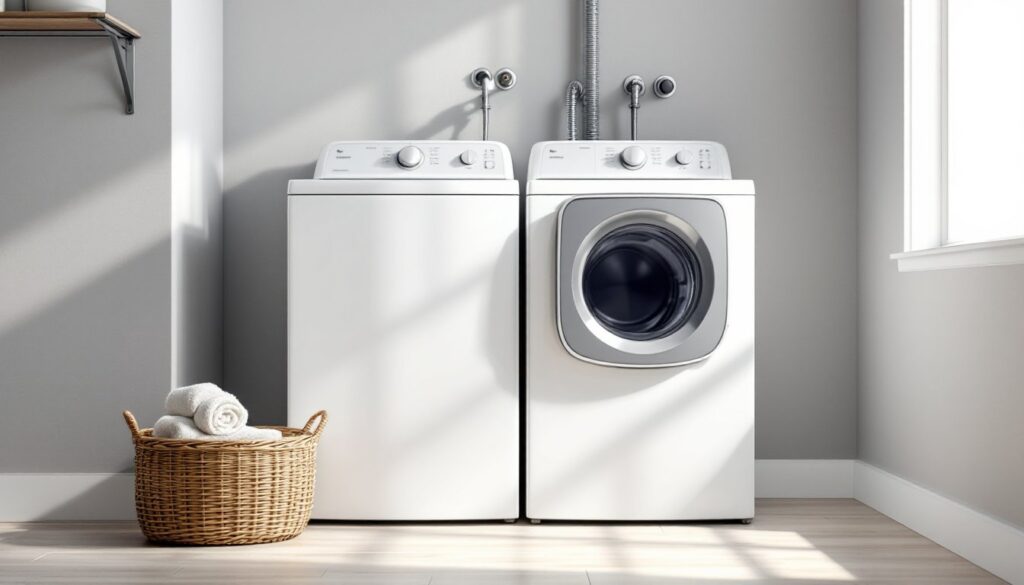
Most estate washers are top-loading machines with agitator or impeller mechanisms, though some front-loading models exist. Dryers typically use standard electric (240V) or gas connections with basic venting requirements. Both appliances share similar dimensions: roughly 27 inches wide, 38-43 inches tall, and 26-28 inches deep, fitting standard laundry alcoves without modification.
Key Features and Benefits of Estate Laundry Appliances
Estate models deliver practical advantages for homeowners who prioritize function and longevity over cutting-edge technology.
Straightforward controls reduce the learning curve and minimize electronic failures. Mechanical timers and simple dial interfaces mean fewer circuit boards to fail, a common weak point in modern appliances. When repairs are needed, replacement parts cost significantly less than proprietary components in high-end models.
Standard capacity drums handle typical household loads efficiently. A 4.0 cubic foot washer accommodates a king-size comforter or roughly 16 pounds of laundry, enough for most families without the water and energy waste of oversized machines running half-full loads.
The construction quality stands out in this price tier. Porcelain-coated steel tubs resist chipping better than plastic alternatives, while commercial-grade belts and pulleys extend operational life. Many estate dryers include smart home automation features that monitor cycles, though standalone units rely on traditional thermostats and timers.
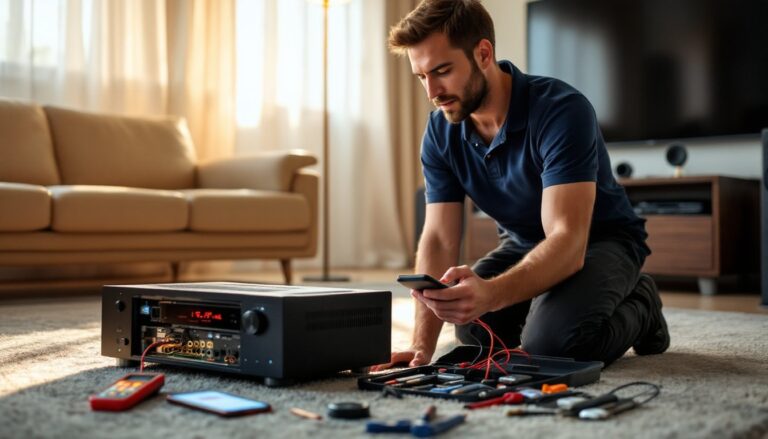
Service accessibility matters more than most buyers realize. Estate appliances use industry-standard parts available through local suppliers, and their simpler mechanics allow competent DIYers to handle basic repairs, replacing a worn belt, cleaning a clogged pump, or swapping a heating element. This contrasts sharply with sealed smart appliances requiring manufacturer-certified technicians.
Cost represents another clear benefit. Estate sets typically retail between $800 and $1,400 for both washer and dryer, compared to $2,500+ for premium pairs. The price difference buys meaningful improvements elsewhere in a home renovation budget.
How to Choose the Right Estate Washer and Dryer for Your Home
Selecting the appropriate laundry set requires matching machine specifications to household needs and physical space constraints.
Capacity and Load Size Considerations
Capacity directly affects wash frequency and efficiency. Cubic footage determines how much laundry fits in a single load, measured in the drum’s total volume.
For households of 1-2 people, a 3.5 cubic foot washer handles weekly laundry with room to spare. Three to four occupants benefit from 4.0 to 4.5 cubic feet, reducing the need for multiple loads. Larger families or those washing bulky items like quilts should consider the upper end of estate capacity ranges.
Dryer capacity should match or slightly exceed washer capacity. A 7.0 cubic foot dryer pairs well with a 4.0 cubic foot washer, ensuring wet loads have adequate tumbling space for efficient drying. Undersized dryers force users to split loads, wasting time and energy.
Top-loaders with agitators clean heavily soiled work clothes effectively but use more water and are harder on fabrics. Impeller models (also called high-efficiency top-loaders) are gentler and use less water, though they require HE detergent and longer cycle times. Front-loaders aren’t common in estate lines but offer the best water efficiency when available.
Energy Efficiency and Operating Costs
Operating costs accumulate quickly, a washer/dryer pair used four times weekly can add $100-200 annually to utility bills depending on local rates and machine efficiency.
Look for the Energy Star certification even in mid-tier models. Certified washers use roughly 25% less energy and 33% less water than standard models. The savings add up: an Energy Star washer costs about $35 per year in electricity versus $50+ for non-certified units, plus water savings.
Electric dryers draw 5,000 to 7,000 watts during operation. A moisture sensor prevents over-drying, cutting runtime and reducing wear on clothing. Models without sensors rely on timed cycles, which often run longer than necessary.
Gas dryers cost more upfront ($50-100 premium) but operate at roughly half the cost per load where natural gas is available. In regions with compact laundry solutions, ventless electric dryers offer installation flexibility but take longer to dry and may have higher energy consumption.
Water usage varies dramatically: traditional top-loaders use 30-40 gallons per load, while HE models use 15-25 gallons. At typical municipal water rates ($0.005 per gallon), that’s $0.15-0.20 versus $0.08-0.13 per load, small per-wash but meaningful over years of use.
Installation Tips and Space Requirements
Proper installation prevents operational issues and ensures appliances last their full service life. Most estate models require standard residential hookups without special modifications.
Measure twice, buy once. Verify laundry space dimensions before purchasing. Allow at minimum:
- Width: 27-30 inches per appliance (54-60 inches for side-by-side installation)
- Depth: 32-34 inches including hoses and vent connections
- Height: 40-44 inches, plus clearance for top-loader lids (add 16-20 inches)
- Door swing: 90-degree clearance for front-access panels
Leave 1 inch on sides and 4 inches in back for air circulation and vibration dampening. Tight spaces cause excessive noise and can damage connections.
Electric dryers require a 240V dedicated circuit with 30-amp service and a three- or four-prong outlet (depending on local code). Gas dryers need a 120V outlet plus a gas line with appropriate shutoff valve, always hire a licensed plumber for gas connections. Running new gas lines typically costs $250-500 depending on distance from the main supply.
Proper venting is non-negotiable for safety. Dryer vents should:
- Use 4-inch rigid metal duct (not flexible plastic or foil, which restrict airflow and pose fire hazards)
- Run as straight as possible with minimal turns (each 90-degree elbow reduces efficiency)
- Terminate outside through a wall-mounted vent cap with a damper
- Stay under 25 feet total length (subtract 5 feet for each 90-degree turn)
Washer installation requires hot and cold water supply valves with accessible shutoff, plus a drain standpipe or laundry sink. The drain should be 18-30 inches above floor level to prevent backflow. Install braided stainless steel hoses instead of rubber, they resist bursting and last significantly longer.
Leveling prevents walk and excessive vibration. Use a carpenter’s level on top of each appliance, adjusting threaded feet until perfectly level front-to-back and side-to-side. Anti-vibration pads underneath further reduce noise transmission to floors.
Maintenance and Troubleshooting for Long-Term Performance
Estate appliances reward basic preventive maintenance with years of reliable service. Most tasks take minutes and require no special tools.
Monthly washer maintenance:
- Wipe door gaskets and drum edges to remove detergent residue and prevent mold
- Run a cleaning cycle (or hot water cycle with 2 cups white vinegar) to clear buildup
- Check hose connections for leaks or bulging
- Clean the lint filter if equipped (some top-loaders have removable filters)
Quarterly dryer maintenance:
- Vacuum lint from the trap housing using a dryer vent brush or shop vac attachment
- Inspect the exterior vent cap for blockages (bird nests, lint accumulation)
- Wipe moisture sensors (small metal strips inside the drum) with rubbing alcohol to maintain accuracy
Annual deep maintenance:
- Disconnect and clean the entire dryer vent run using a vent cleaning kit ($15-25) or hire a service ($100-150)
- Inspect washer hoses for cracks or wear: replace every 5 years regardless of appearance
- Check dryer drum belt tension and listen for unusual squeaks or grinding
Common troubleshooting for estate models:
Washer won’t drain: Check for clogged pump filter (usually behind a small access panel at the front). Remove coins, lint, and debris. If the pump hums but doesn’t drain, it may need replacement ($50 part, 30-minute DIY job).
Dryer takes multiple cycles: Clean the entire vent system first. If that doesn’t solve it, the heating element may be weak (test continuity with a multimeter) or the thermostat may need replacement.
Excessive vibration: Re-level the machine and ensure it’s not overloaded. Top-loaders need balanced loads, redistribute heavy items like towels before starting the spin cycle.
Error codes or won’t start: Consult the owner’s manual for specific codes. Many issues resolve by unplugging for 60 seconds to reset the control board.
When to call a pro: If you smell burning rubber, see sparks, detect gas odors, or encounter repeated control board failures, stop using the appliance and contact a qualified technician. Some repairs, especially those involving gas connections or high-voltage electrical components, aren’t DIY territory.
Replacement parts for estate models remain available through appliance parts suppliers like RepairClinic or AppliancePartsPros. Keep the model number (usually on a tag inside the door or on the back panel) for accurate part ordering.