
Your home’s exterior is the first thing neighbors see and the last thing you remember to update. Faded siding, tired landscaping, and a weathered front door don’t just hurt curb appeal, they signal deferred maintenance to potential buyers and make coming home feel less satisfying. The good news? An exterior makeover doesn’t require a construction loan or a six-month timeline. With the right priorities and a realistic budget, homeowners can achieve dramatic transformations using a mix of DIY projects and strategic professional help. This guide breaks down high-impact updates, planning strategies, and proven techniques to refresh a home’s facade in 2026.
Table of Contents
ToggleKey Takeaways
- A home exterior makeover prioritizes structural repairs first—like replacing rotted trim and fixing caulking—before investing in cosmetic updates, ensuring lasting results and protection from moisture damage.
- Exterior paint delivers one of the highest visual impacts per dollar when combined with proper prep work, with coverage averaging 350–400 square feet per gallon and typically requiring 10–15 gallons for a 1,500–2,000 square foot home.
- Your home’s exterior transformation can be achieved at multiple budget levels: under $2,000 for door and trim refreshes, $2,000–$7,000 for full exterior paint and landscaping, or $7,000–$20,000 for professional paint, siding repair, and hardscaping projects.
- A striking front entry—featuring a bold door color, updated lighting, and quality hardware—often drives the most noticeable curb appeal improvement without requiring major structural investment.
- Fresh landscaping and hardscaping, including mulched beds, clean edging, and repaired walkways, instantly boost curb appeal while improving drainage and preventing foundation issues.
- Material lifespan awareness helps homeowners plan preventive maintenance: exterior paint lasts 5–10 years, wood trim 15–20 years in wet climates, and asphalt shingles 20–30 years, preventing costly emergency repairs.
Why Your Home’s Exterior Deserves a Fresh Look
Curb appeal isn’t vanity, it’s value. Real estate professionals consistently cite exterior condition as one of the top factors influencing buyer interest and appraisal outcomes. Even homeowners not planning to sell benefit from exterior updates: properly maintained siding and trim protect structural components from moisture intrusion, while updated landscaping improves drainage and reduces foundation risk.
Beyond financials, there’s the psychological lift. A well-kept exterior creates pride of ownership and sets the tone for the entire property. Neglected exteriors communicate inattention, which often extends to less visible systems like roofing, gutters, and grading.
The exterior also faces the harshest conditions, UV exposure, freeze-thaw cycles, wind-driven rain, and impact from landscaping equipment. Materials degrade on predictable timelines: exterior paint typically lasts 5–10 years depending on climate and substrate: wood trim may need replacement every 15–20 years in wet climates: and asphalt shingles have a 20–30 year lifespan. Staying ahead of these cycles prevents emergency repairs and compounds aesthetic and functional improvements.
Plan Your Exterior Makeover: Budget and Priorities
Start with an honest assessment. Walk the property at different times of day and note peeling paint, damaged siding, overgrown plants, cracked walkways, and outdated fixtures. Photograph problem areas, digital records help track progress and guide contractor bids.
Next, categorize issues:
- Structural/weather-related: Rotted trim, failed caulking, damaged flashing, cracked foundations
- Cosmetic: Faded paint, dated shutters, tired landscaping
- Functional: Poor lighting, unsafe steps, inadequate drainage
Address structural problems first. A fresh coat of paint over rotted siding is wasted money. If there’s wood rot around windows or door frames, remove and replace those sections before painting. If gutters overflow, fix grading and extend downspouts before refreshing flower beds.
Budgeting tiers for 2026:
- Under $2,000: Paint front door and trim, refresh mulch, add lighting, power-wash siding, update house numbers and mailbox
- $2,000–$7,000: Full exterior paint (DIY or partial professional help), new front door, small hardscaping project (walkway or stoop refresh), landscape bed overhaul
- $7,000–$20,000: Professional paint job, siding repair or partial replacement, new garage door, deck or porch rebuild, significant landscape installation
- Above $20,000: Full siding replacement, stone or brick veneer, major hardscaping (paver driveway, retaining walls), full landscape redesign
Prices vary by region, material grade, and labor availability. Get three quotes for professional work and confirm scope in writing. DIY labor can cut costs by 40–60%, but factor in tool rental, material waste, and time.
High-Impact Updates That Transform Your Facade
Paint and Siding Refresh
Exterior paint delivers one of the highest visual impacts per dollar spent. Prep work makes or breaks the result, budget at least as much time for prep as for application.
Prep steps:
- Pressure wash the entire surface. Use a 15–25-degree nozzle tip and keep the wand 12–18 inches from siding to avoid damage. Allow 48 hours of dry weather before painting.
- Scrape and sand loose or peeling paint. Feather edges so transitions aren’t visible under new coats.
- Fill and caulk gaps around trim, windows, and joints using a high-quality exterior paintable caulk (e.g., siliconized acrylic).
- Prime bare wood, patched areas, and any stains with a stain-blocking primer. Skip this and you’ll see bleed-through or adhesion failure within a year.
Paint selection: Use 100% acrylic latex for most siding types. Coverage averages 350–400 square feet per gallon, but textured surfaces require more. Buy from a single batch to avoid color variation.
For a home spanning 1,500–2,000 square feet of paintable surface, expect to use 10–15 gallons for two coats. Plan on 3–5 full days of work for a competent DIYer with help.
If siding is damaged, cracks in fiber cement, warped vinyl, or rotted wood, replace sections before painting. Painting over compromised material invites moisture infiltration and mold. Fiber cement and engineered wood are durable replacements: vinyl is cost-effective but less flexible in color changes down the road.
Many farmhouse-style renovations incorporate board-and-batten or shiplap siding for texture and character, a trend that continues strong in 2026.
Front Door and Entry Enhancements
The front entry is the focal point. A tired door undermines even the best paint job.
Door replacement vs. refresh:
- Refresh: If the door is solid and weathertight, sand, prime, and repaint. Use exterior enamel in a bold, contrasting color. Remove hardware, clean or replace it, and reinstall after paint cures.
- Replace: If the door is warped, won’t latch properly, or has failing weatherstripping, replace it. Steel and fiberglass doors offer excellent durability and insulation (look for an R-value of 10 or higher in cold climates). Wood doors provide classic aesthetics but require more maintenance.
Standard pre-hung exterior doors are typically 36 inches wide × 80 inches tall, though sizes vary. Verify rough opening dimensions before ordering.
Entry upgrades beyond the door:
- Replace or refinish the storm door if present. Aluminum frames can be painted: consider a model with interchangeable glass and screen panels.
- Update exterior lighting. Flanking sconces should be mounted at eye level (60–66 inches from the porch floor) and proportionate to the door width. LED fixtures save energy and last 15–20 years.
- Refresh or replace the porch or stoop. Cracked concrete can be resurfaced or overlaid with pavers. Wood porches may need joist inspection, board replacement, and fresh decking stain. Use a semi-transparent stain on horizontal surfaces for better wear resistance.
- Add a new house number plaque and mailbox. Mount numbers at a height visible from the street, typically 4–6 feet above ground.
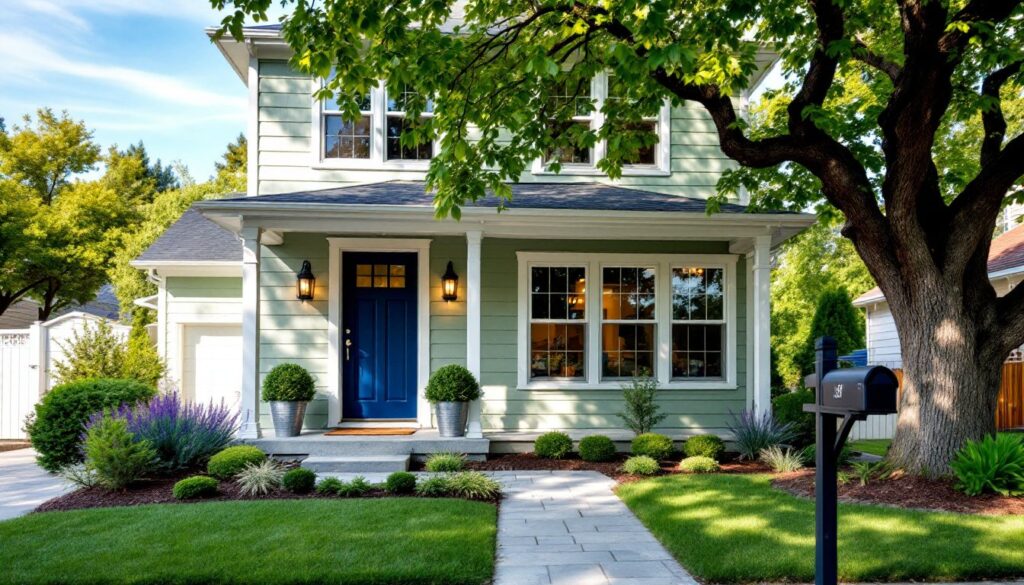
Some of the most striking transformations, like those featured in exterior makeover showcases, hinge on bold door color and cohesive entry details rather than costly structural changes.
Landscaping and Hardscaping for Instant Curb Appeal
Overgrown shrubs and patchy lawns drag down even freshly painted homes. Landscaping offers quick wins and long-term value.
Foundation plantings:
- Remove or severely prune overgrown foundation shrubs. A common mistake is planting fast-growing varieties too close to the house. Shrubs should stay at least 3 feet from siding to allow airflow and prevent moisture trapping.
- Choose plants suited to the exposure (sun/shade) and mature size. Dwarf cultivars and ornamental grasses are low-maintenance and visually interesting.
- Layer plantings: taller specimens in back, mid-height perennials in the middle, groundcovers or mulch in front.
Mulch and edging:
Fresh mulch instantly tidies beds. Apply 2–3 inches of shredded hardwood or pine bark, pulling it back slightly from plant stems to prevent rot. Edge beds with a half-moon edger or spade to create clean lines between lawn and mulch. Metal or plastic landscape edging can formalize the look but isn’t required.
Hardscaping projects:
- Walkways: Cracked concrete paths can be replaced with pavers, flagstone, or poured concrete. Standard paver walkways are 3–4 feet wide. Excavate 6–8 inches, lay 4–6 inches of compacted gravel base, then 1 inch of leveling sand, set pavers, and sweep polymeric sand into joints.
- Stoops and steps: If settling or cracking is present, rebuild rather than patch. Bluestone, concrete, or composite treads are durable. Follow local codes for riser height (typically 7–7.75 inches) and tread depth (minimum 10 inches).
- Retaining walls: For slopes or grade changes, a segmental retaining wall made from concrete blocks is a strong DIY option. Walls over 4 feet tall usually require engineering and a permit.
Lawn care:
A dense, weed-free lawn frames everything else. Overseed bare patches in early fall (cool-season grasses) or late spring (warm-season grasses). Aerate compacted soil and topdress with compost. Mow at the highest setting your grass type tolerates, taller grass shades out weeds and develops deeper roots.
Regional and seasonal planting ideas abound on trusted resources like Southern Living, which offers garden plans and porch styling tailored to climate zones.
Conclusion
An exterior makeover doesn’t demand a blank check or months of downtime. Prioritize structural fixes, invest in high-impact updates like paint and entry upgrades, and layer in landscaping that scales with the budget. Whether tackling a weekend door refresh or a multi-phase siding and hardscape project, the results compound: better home protection, stronger market value, and a property that feels welcoming every time someone pulls into the driveway.