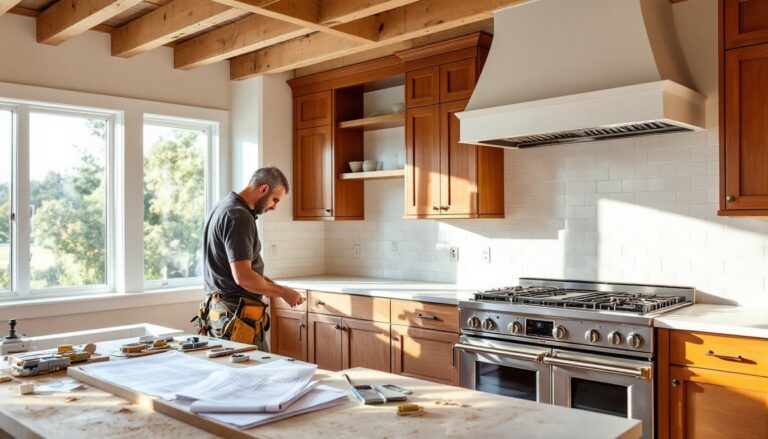

Remodeling a home without a solid estimate is like framing a wall without measuring, you’re bound to run into costly surprises. Whether planning a kitchen overhaul or a bathroom refresh, accurate remodeling estimates form the backbone of any successful project. They help homeowners set realistic budgets, compare contractors fairly, and avoid the mid-project panic that comes from underestimating materials, labor, or timelines. In 2026, with material costs still fluctuating and labor shortages affecting availability, getting detailed, written estimates isn’t just smart, it’s essential.
Table of Contents
ToggleKey Takeaways
- Accurate home remodeling estimates are essential for setting realistic budgets, comparing contractors fairly, and avoiding costly project surprises and mid-project budget overruns.
- Request itemized estimates from at least three contractors that break down labor by task and materials by category, and always insist on written estimates to establish clear accountability.
- Labor typically represents 40–60% of remodeling estimate costs, while materials account for the remaining 40–60%, with quality tiers and brand specifications critical for fair comparisons.
- Include a 15–20% contingency buffer beyond the estimate total to account for unforeseen issues like rotted subfloor, outdated wiring, or supply chain delays that are common in remodeling projects.
- Avoid choosing the lowest bid without scrutiny; compare apples-to-apples by verifying that all estimates include the same scope, materials, permits, and line items like demolition and disposal.
- Set up a dedicated project account, track spending in real time with a spreadsheet, and review the estimate alongside your contract to prevent scope creep and ensure both parties honor agreed terms.
What Is a Home Remodeling Estimate and Why You Need One
A home remodeling estimate is a detailed breakdown of the anticipated costs for a renovation project. It typically includes labor, materials, permits, and any subcontractor fees. Estimates differ from bids or quotes, an estimate provides a ballpark figure based on initial project scope, while a bid is a firm commitment to price.
Estimates serve multiple purposes. They help homeowners understand the financial scope before committing, provide a basis for comparing multiple contractors, and outline the project timeline. Without one, homeowners risk budget overruns, scope creep, and misunderstandings about what’s included.
Good estimates also clarify who’s responsible for what. Does the contractor pull permits, or is that on the homeowner? Are demolition and disposal included, or billed separately? These details prevent friction once the work begins.
Finally, a written estimate creates accountability. If a contractor verbally says “around $15,000” but the final bill hits $22,000, there’s no documentation to dispute the difference. Always insist on written estimates, even for smaller projects.
How to Request Accurate Remodeling Estimates from Contractors
Getting accurate estimates starts with clear communication. Before contacting contractors, define the project scope in writing. Include specifics: room dimensions, desired finishes, fixture preferences, and any structural changes. The more detail provided upfront, the tighter the estimate.
Request itemized estimates from at least three contractors. Lump-sum quotes like “$30,000 for kitchen remodel” make it impossible to compare value or identify padding. Itemization should break down labor by task (demo, framing, drywall, electrical, plumbing, finish carpentry), materials by category (cabinets, countertops, flooring, tile), and any permits or fees.
Ask contractors to visit the site. Photos and descriptions can’t replace an in-person assessment. A pro needs to see joist spacing, existing plumbing runs, electrical panel capacity, and wall composition (drywall vs. plaster, studs vs. metal framing). Site visits also reveal hidden issues, outdated wiring, asbestos tile, or foundation settling, that affect cost.
Many homeowners use platforms like HomeAdvisor to connect with vetted contractors and gather initial cost ranges. These tools can streamline the process, especially for common projects where historical pricing data is available.
Be upfront about budget constraints. If a homeowner has $20,000 but the project typically runs $30,000, a good contractor will suggest value engineering, swapping quartz for laminate countertops, choosing prefab cabinets over custom, or phasing the work.
Understanding the Components of a Remodeling Estimate
A thorough estimate breaks down into several key components. Understanding each helps homeowners evaluate whether a quote is realistic or lowballing to win the job.
Labor costs typically represent 40–60% of the total estimate. This includes the general contractor’s crew, subcontractors (electricians, plumbers, HVAC techs), and project management. Labor rates vary by region, metropolitan areas command higher wages than rural markets.
Materials account for the remaining 40–60%. This includes everything from 2×4 studs (actual size 1.5″ × 3.5″) and drywall sheets to finish materials like tile, cabinetry, and fixtures. Quality tiers matter here, builder-grade cabinets cost half what semi-custom options do. Estimates should specify brands or quality levels to allow fair comparisons.
Permits and fees vary by jurisdiction. Kitchen and bathroom remodels often require building permits if they involve plumbing, electrical, or structural changes. Permit costs range from $200 to $2,000+ depending on scope and locality. Some municipalities require licensed professionals for electrical and plumbing work per NEC (National Electrical Code) and IRC (International Residential Code) standards.
Contingency is a line item many contractors include, typically 10–20% of the total, to cover unforeseen issues like rot discovered during demo, outdated wiring that doesn’t meet code, or supply chain delays. It’s not padding: it’s realistic planning.
Disposal and cleanup costs are often overlooked. A full kitchen demo generates 2–4 tons of waste. Dumpster rental and dump fees can add $500–$1,500.
Watch for vague line items like “miscellaneous” or “allowances.” If an estimate lists a $3,000 tile allowance but doesn’t specify coverage or quality, the homeowner may end up choosing between cheap tile or paying overages.
Average Home Remodeling Costs by Project Type
Cost benchmarks help homeowners gauge whether estimates are in the ballpark or wildly off. Remember, these are national averages for 2026, regional labor rates, material availability, and home age all influence final costs.
Kitchen remodels range from $15,000 for a cosmetic refresh (new cabinets, countertops, backsplash, appliances) to $75,000+ for a full gut with layout changes, custom cabinetry, and high-end finishes. Mid-range remodels typically run $30,000–$50,000. Moving plumbing or gas lines adds significant cost due to code requirements and labor intensity.
Bathroom remodels vary widely. A simple refresh, new vanity, toilet, tile surround, and paint, can run $5,000–$12,000. A full primary bath remodel with custom tile, frameless shower enclosure, double vanity, and in-floor heating often hits $20,000–$40,000. Small bathrooms (5×8 feet) cost less in materials but labor per square foot is higher due to tight working conditions.
Basement finishing averages $30–$75 per square foot. A 1,000-square-foot basement runs $30,000–$75,000 depending on finishes and whether it includes a bathroom or kitchenette. Egress windows (required by code for bedrooms) add $2,500–$5,000 each.
Room additions cost $100–$400 per square foot. A 200-square-foot primary bedroom addition runs $20,000–$80,000 depending on foundation type (slab vs. crawlspace), exterior finish, and whether it requires HVAC extension.
Platforms like Angi provide localized cost data and contractor reviews, which help homeowners verify that their estimates align with regional norms.
Kitchen and Bathroom Remodeling Costs
Kitchens and bathrooms are the most common remodel projects, and the most variable in cost. Both involve plumbing, electrical, and finish work, making them labor-intensive.
Kitchen cabinets alone can range from $3,000 for stock RTA (ready-to-assemble) units to $25,000+ for custom hardwood. Countertops follow a similar spectrum: laminate runs $20–$50 per square foot installed, quartz $60–$120, and natural stone $80–$200+.
Backsplash tile installation costs $10–$30 per square foot depending on tile type and pattern complexity. Subway tile in a straight lay is cheaper than a herringbone mosaic.
In bathrooms, vanities range from $300 for a basic 24-inch unit to $3,000+ for a custom double vanity. Shower and tub surrounds vary from $1,200 for a fiberglass insert to $8,000+ for custom tile with multiple niches and bench seating.
Flooring impacts cost significantly. Vinyl plank runs $3–$7 per square foot installed, ceramic tile $8–$15, and natural stone $12–$25. Don’t forget underlayment, tile requires cement backer board, adding $1–$2 per square foot.
Plumbing fixtures span budget to luxury. A basic faucet costs $75–$150, mid-range $200–$400, and designer fixtures $600+. Toilets range from $120 for builder-grade to $800+ for dual-flush or comfort-height models.
Resources like ImproveNet offer project-specific cost breakdowns and help homeowners understand where their money goes in these high-impact rooms.
Common Mistakes to Avoid When Comparing Estimates
Choosing the lowest bid without scrutinizing details is the most common, and costly, mistake. A contractor who’s $8,000 under the competition might be cutting corners, underestimating hours, or planning to upsell change orders once work begins.
Compare apples to apples. If one estimate includes demolition and disposal while another doesn’t, adjust mentally before deciding. Look for discrepancies in material specs, one contractor might quote luxury vinyl plank while another assumes sheet vinyl. The price difference is significant, but so is durability and appearance.
Beware of missing line items. If an estimate doesn’t mention permits, assume they’re not included. Same for trim work, paint, or finish electrical (switch plates, outlet covers). These “small” items add up fast.
Check insurance and licensing. A bargain contractor who isn’t properly insured shifts liability to the homeowner if someone gets hurt on-site. Verify general liability and workers’ compensation coverage, and confirm licensing where required (most states mandate it for projects over $500–$1,000).
Don’t ignore payment terms. Reputable contractors request a deposit (typically 10–25%) and stage payments based on milestones. Be wary of anyone demanding 50% or more upfront or full payment before work starts. That’s a red flag.
Watch for scope creep. Vague language like “upgrade finishes as needed” invites disputes. Every material choice should be specified in the estimate or handled via written change order with agreed pricing before installation.
Question unusually fast timelines. A kitchen remodel realistically takes 6–12 weeks depending on scope. A contractor promising three weeks is either overstaffing (expensive) or underestimating (risky).
How to Use Your Estimate to Plan and Budget Effectively
Once estimates are in hand, treat them as planning tools, not just price tags. Build a project budget that includes a 15–20% contingency beyond the estimate total. Unexpected issues, rotted subfloor, knob-and-tube wiring, mold behind tile, are the norm in remodeling, not the exception.
Prioritize spending based on return on investment and personal use. Upgrading a kitchen’s layout and workflow yields more satisfaction than splurging on a commercial-grade range most homeowners won’t fully use. Similarly, a well-executed primary bath remodel adds more resale value than a basement bar.
Create a material selection timeline. Contractors need lead time for ordering cabinets (6–12 weeks for semi-custom), tile, fixtures, and appliances. Delays in homeowner decision-making push back the entire schedule, sometimes incurring contractor standby fees.
Set up a separate project account. Transfer the budgeted amount plus contingency into a dedicated checking account. This prevents project funds from mixing with household expenses and makes payment scheduling easier. Pay by check or credit card (if the contractor accepts it without excessive fees) to maintain a paper trail.
Review the estimate alongside the contract. The contract should reference the estimate and specify that any changes require written approval. This protects both parties, the contractor can’t add charges without consent, and the homeowner can’t demand extra work without compensating for it.
Track spending in real time. Keep a spreadsheet with budgeted amounts, actual costs, and variance. This helps identify overruns early, when adjustments are still possible, switching from marble to quartz, eliminating a custom tile accent, or opting for prefab instead of custom vanity.
Finally, don’t liquidate savings or max out credit without a backup plan. If the project runs over budget (many do), having access to a home equity line of credit or reserve funds prevents costly work stoppages.