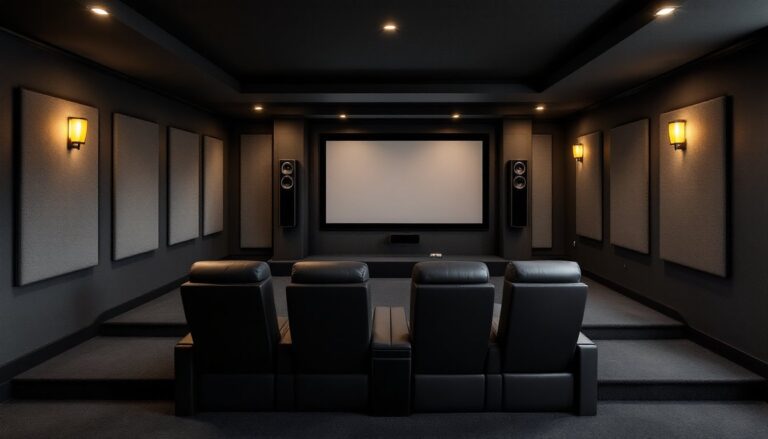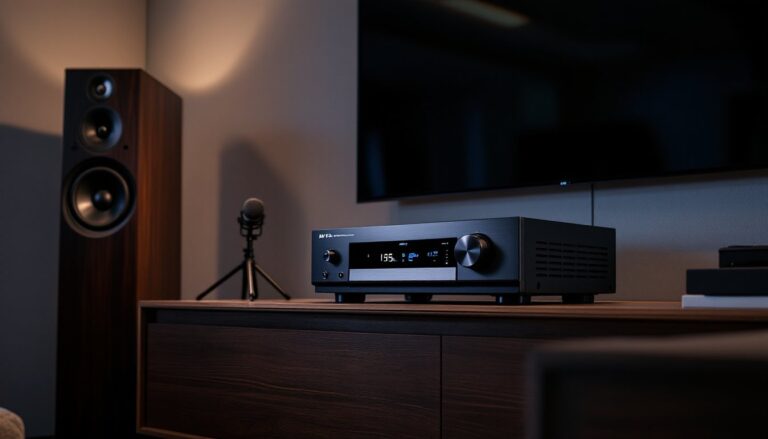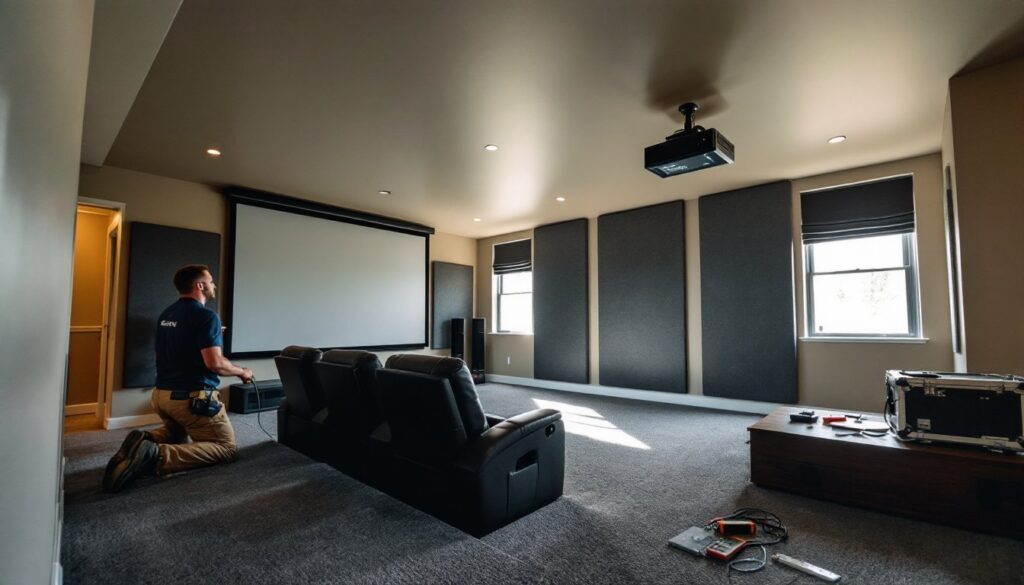

Nashville homeowners are transforming spare bedrooms, basements, and bonus rooms into dedicated entertainment spaces that rival commercial cinemas. Whether it’s to catch Titans games in surround sound, host movie nights with family, or create an immersive gaming setup, a well-designed home theater adds both enjoyment and resale value. This guide walks through the planning, equipment, and installation decisions specific to Nashville homes, including when to DIY and when to call in a pro.
Key Takeaways
- Home theater installation in Nashville, TN ranges from $3,000–$8,000 for modest setups to $25,000+ for high-end systems, making it an affordable entertainment investment compared to coastal markets.
- Choose a room with minimum dimensions of 10 feet × 12 feet and 8-foot ceilings; basements are ideal in Nashville homes for natural darkness and sound isolation, though moisture checks are essential.
- Plan for dedicated 20-amp electrical circuits, adequate HVAC capacity, and acoustic treatments before purchasing equipment to ensure optimal performance and equipment longevity.
- A 5.1 surround sound system with a quality projector or large-format TV forms the foundation of a Nashville home theater, with Atmos-enabled configurations adding immersive overhead sound.
- Hire a CEDIA-certified professional installer for complex work like in-wall speakers, acoustic design, and smart home integration; expect professional installation to cost $1,500–$5,000+ but ensures proper calibration and warranty protection.
- Basements, bonus rooms, and spare bedrooms all work for home theater in Nashville, but evaluate existing electrical infrastructure, HVAC zones, and soundproofing needs before finalizing your room choice.
Why Nashville Homeowners Are Investing in Home Theaters
Nashville’s housing market features everything from historic bungalows in East Nashville to sprawling suburban builds in Brentwood and Franklin. Many of these homes include finished basements or flex spaces that translate perfectly into dedicated theaters.
The investment makes sense for several reasons. First, Nashville’s entertainment culture runs deep, residents who love live music and performance also appreciate high-quality home audio and video. Second, the city’s humid summers and occasional ice storms make year-round indoor entertainment appealing. Third, home theaters consistently rank among the top features buyers look for in mid-to-upper-tier homes across Davidson and Williamson counties.
A modest home theater setup (quality projector, screen, and 5.1 surround sound) can run $3,000–$8,000 in equipment alone. Higher-end installations with acoustic treatments, tiered seating, and smart home integration can exceed $25,000. But, Nashville’s relatively affordable cost of living compared to coastal markets means homeowners often get more theater for their budget here than in comparable metro areas.
Planning Your Nashville Home Theater: Space and Budget Considerations
Before buying a single speaker, evaluate the room itself. Dimensions, existing electrical, HVAC capacity, and ambient light all dictate what equipment will work and what upgrades are necessary.
Minimum room size: A functional home theater needs at least 10 feet x 12 feet for seating and screen placement. Ideal dimensions follow a 1.6:1 ratio (e.g., 12 feet wide by 19 feet deep) to minimize standing sound waves. Ceiling height should be at least 8 feet: anything lower makes projector placement difficult and creates a cramped feel.
Electrical requirements: Plan for at least two dedicated 20-amp circuits, one for AV equipment and one for lighting/accessories. Most home theater receivers and powered subwoofers draw significant current. If your room only has standard 15-amp outlets on shared circuits, budget for an electrician to upgrade. This work requires a permit in Nashville and must meet NEC (National Electrical Code) standards.
HVAC considerations: Electronics generate heat. A room packed with amplifiers, a projector, and multiple bodies needs adequate cooling. Undersized HVAC can lead to uncomfortable viewing and shortened equipment life. If your chosen room is on a separate zone or has its own ductwork, confirm it can handle the added load.
Choosing the Right Room in Your Nashville Home
Basements are the most popular choice in Nashville because they’re naturally dark, offer sound isolation, and tend to stay cooler. But, many older Nashville homes have unfinished or partially finished basements with moisture issues. Check for water intrusion, especially after heavy rains. If the space has a history of dampness, install a vapor barrier and consider a dehumidifier before running drywall or carpeting.
Bonus rooms above garages work well if they’re insulated and climate-controlled. Watch for ambient noise from HVAC systems or street traffic, which can interfere with dialog clarity.
Spare bedrooms are viable for smaller setups. If windows face west or south, budget for blackout shades or cellular blinds to control glare. Bedrooms also tend to have thinner walls, so plan for soundproofing if family members or neighbors are nearby.
Avoid rooms with vaulted ceilings or excessive hard surfaces (tile, hardwood, bare drywall). These create echo and make audio tuning difficult. If you’re committed to such a space, factor in acoustic panels or fabric wall treatments to dampen reflections.
DIY vs. Professional Home Theater Installation in Nashville
Many Nashville homeowners can handle basic equipment setup, mounting a TV, connecting a soundbar, running HDMI cables. But a true home theater involves speaker wiring, projector calibration, network integration, and sometimes structural modifications like building a false wall for in-wall speakers or adding acoustic insulation.
What most DIYers can handle:
- Mounting a projector to ceiling joists using a universal mount
- Running speaker wire through walls if access is easy (open studs or a basement ceiling)
- Installing a motorized screen with simple wall or ceiling brackets
- Connecting components and performing basic receiver setup using auto-calibration (Audyssey, YPAO, Dirac)
When to call a professional:
- In-wall or in-ceiling speaker installation that requires cutting drywall and fishing wire through insulated cavities
- Acoustic treatment design, including bass traps and diffusers positioned based on room modes
- Smart home integration with Control4, Crestron, or Savant systems
- Network infrastructure for 4K or 8K streaming, requiring CAT6a runs and managed switches
- Any work involving load-bearing walls or structural modifications (permits required)
Nashville has a solid pool of certified AV installers who can handle complex projects. Expect professional installation to add $1,500–$5,000+ depending on the scope. The advantage: proper calibration, clean wire management, and warranty protection on both labor and equipment.
Essential Equipment for Your Nashville Home Theater
Display options:
- Projectors deliver the largest image for the dollar. A solid 1080p LCD or DLP projector starts around $500. For 4K HDR, budget $1,200–$3,000. Pair with a 100-inch to 120-inch fixed or motorized screen. Screens range from $200 (manual pull-down) to $2,000+ (motorized with tensioning).
- Large-format TVs (75-inch to 85-inch) simplify setup and work in rooms with ambient light. OLED models offer superior blacks: QLED handles brightness better. Prices range from $1,500 to $4,000+.
Audio system:
A 5.1 surround setup is the standard: left, center, right, two surrounds, and a subwoofer. Budget $600–$2,000 for a quality receiver (Denon, Yamaha, Marantz) with Dolby Atmos and DTS:X support. Speaker packages vary widely, entry-level sets start at $400, while premium tower and bookshelf combinations can exceed $3,000.
Atmos configurations (5.1.2, 7.1.4) add overhead or height speakers for immersive sound. Ceiling-mounted or upward-firing modules work well in Nashville homes with standard 8-to-9-foot ceilings.
Soundproofing and acoustics:
Nashville building codes don’t specifically mandate soundproofing for residential theaters, but if you share walls with neighbors or family bedrooms, consider:
- Roxul Safe’n’Sound insulation in wall cavities
- Mass-loaded vinyl (MLV) behind drywall
- Resilient channel or sound clips to decouple drywall from studs
- Acoustic panels (2-inch thick, fabric-wrapped fiberglass) on first-reflection points and rear walls
Seating and lighting:
Theater seating with cup holders and recline features runs $400–$1,200 per seat. Rows should be spaced 36 inches apart for legroom. For lighting, install dimmable LED sconces or rope lighting on a separate switch. Avoid overhead cans directly above the screen, which cause glare.
Smart home integration:
Many Nashville homeowners are adding smart thermostats, lighting, and security systems, and modern home automation platforms allow theater controls to integrate seamlessly. A universal remote (Logitech Harmony, discontinued but still functional) or control app simplifies operation.
Finding the Right Home Theater Installer in Nashville, TN
Nashville’s installer landscape includes national chains, boutique AV firms, and independent contractors. Start by checking credentials: look for CEDIA (Custom Electronic Design & Installation Association) certification, which indicates training in system design, acoustics, and code compliance.
Questions to ask potential installers:
- Do you carry liability insurance and workers’ comp?
- Will you pull permits for electrical or structural work?
- What brands do you recommend, and why?
- Do you offer a warranty on labor separate from manufacturer warranties?
- Can you provide references from Nashville-area projects?
Get at least three written estimates. Beware of quotes that seem unusually low, they often omit critical items like wire, conduit, or calibration time. A detailed estimate should break out equipment, labor, materials, and any subcontractor fees (electrician, HVAC, drywall).
Timeline matters, too. Most installations take 2–5 days for a standard setup, longer if construction is involved. Confirm the installer’s schedule and whether they handle cleanup and debris removal.
If budget is tight, some Nashville installers offer consultation-only services ($200–$500) where they design the system and create a wiring plan, then you handle the physical install. This hybrid approach works well for confident DIYers who want professional guidance without full-service costs. Platforms like HomeAdvisor can help match homeowners with local contractors based on project scope and budget.
Conclusion
Building a home theater in Nashville combines technical planning with an understanding of local building conditions and installer options. Whether tackling a DIY setup or hiring a pro, focus on room selection, electrical capacity, and acoustic treatment first, these foundational decisions determine how well the finished system performs. With the right planning, Nashville homeowners can enjoy a cinema-quality experience without leaving home.