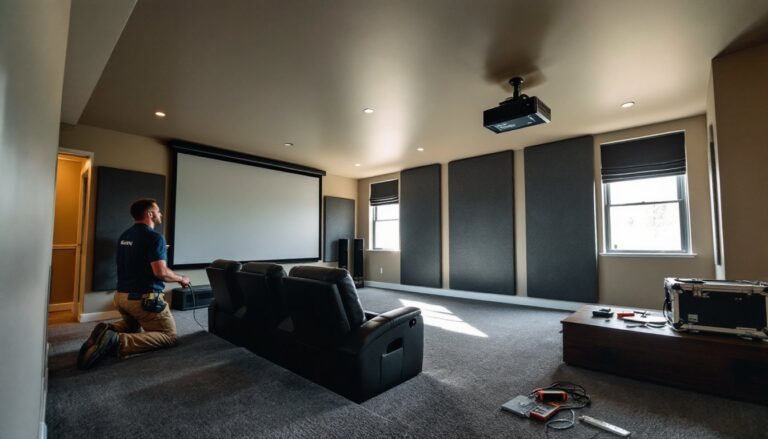

A poorly chosen paint color can sabotage even the best home theater setup. Glare from light-colored walls washes out screen contrast, and reflective finishes bounce ambient light around the room like a disco ball. Meanwhile, the right color palette, paired with the proper sheen, creates a viewing environment that rivals commercial cinemas. This guide walks through wall colors, ceiling treatments, finish selections, and the mistakes that trip up most DIYers before they crack open the first gallon of paint.
Key Takeaways
- Home theater colors should have a low light reflectance value (LRV below 10) to absorb stray light and maintain screen contrast, making dark colors essential for optimal viewing.
- Dark neutral shades like charcoal gray and deep brown are the best performers for home theater walls, offering excellent light absorption while being forgiving during application.
- Flat or matte finishes are non-negotiable for theater rooms—any sheen, including eggshell or satin, reflects light and negates the benefits of dark wall colors.
- Ceilings must match or exceed the darkness of walls; white ceilings reflect screen light back into the room and significantly compromise picture quality.
- Skip primer that’s white-tinted and use gray-tinted primer instead, as dark colors often require three coats and proper surface preparation to avoid visible streaks and imperfections.
- Sample large paint swatches (at least 2′ x 2′) in your actual room with dimmed lighting before committing, since home theater colors shift dramatically under different lighting conditions.
Why Color Matters in Your Home Theater
Color choice in a home theater isn’t about aesthetics, it’s physics. Light from the screen reflects off every surface in the room, and lighter walls bounce that light back toward viewers, reducing perceived contrast and creating a washed-out image. Professional cinemas use dark surfaces for this exact reason: they absorb stray light instead of reflecting it.
Light absorption is the primary goal. Dark colors, especially those with low light reflectance values (LRV), minimize distractions and allow the screen to be the only bright element in the space. An LRV below 10 is ideal for walls directly facing or flanking the screen.
Color temperature also affects perception. Warm tones (browns, deep reds) can subtly shift the white balance of reflected light, while cool neutrals (charcoal, navy, black) maintain color accuracy. For dedicated theaters where picture quality is paramount, cool-toned darks perform best.
Finally, dark colors help define the room’s boundaries. In a properly painted theater, walls seem to recede, making the screen feel larger and the space more immersive. This psychological effect works alongside the optical benefits to create a true cinema experience.
Best Colors for Home Theater Walls
Dark Neutrals: The Classic Choice
Charcoal gray and deep brown are the workhorses of home theater design. They provide excellent light absorption without the stark feel of pure black, and they’re forgiving during application, minor roller marks or touch-ups blend more easily than with jet-black paint.
Benjamin Moore’s Kendall Charcoal (HC-166, LRV 5.59) and Sherwin-Williams’ Tricorn Black (SW 6258, LRV 3) are popular choices. Charcoal works well in multipurpose spaces where the theater doubles as a family room, while near-black shades suit dedicated theaters.
Chocolate brown (like Behr’s Broadway or SW’s Black Bean) adds warmth without sacrificing light control. Brown tones pair well with leather seating and wood trim, creating a classic cinema-club aesthetic. LRV should still stay below 10 for walls adjacent to the screen.
Taupe and greige sit at the lighter end of the neutral spectrum. They work in rooms with significant natural light that can’t be fully blocked, but they compromise contrast. Use them only on walls perpendicular to the screen, never on the front wall.
Bold Dark Colors for Drama and Depth
Navy blue offers a sophisticated alternative to black and gray. It provides strong light absorption (LRV typically 4–7) while adding a subtle color identity. Sherwin-Williams’ Naval and Benjamin Moore’s Hale Navy are both theater-appropriate when used in flat or matte finishes.
Deep burgundy and oxblood red reference classic cinema interiors. These colors absorb light effectively and create a luxurious, vintage feel. But, red can slightly warm the reflected light, not ideal if color accuracy is critical. Reserve red for accent walls or rooms where ambiance outweighs technical performance.
Dark green, particularly moody shades like Benjamin Moore’s Vintage Vogue, brings an unexpected richness to theater spaces. Hunter green and forest green work well in rooms with wood paneling or traditional decor. Like red, green can introduce a color cast, so it’s best used on side walls rather than the front wall directly behind or facing the screen.
Avoid mid-tone colors entirely, slate blue, olive, or medium gray, since they reflect too much light to function well in a theater setting.
Ceiling and Trim Color Strategies
The ceiling is the most overlooked surface in home theater planning, but it contributes significantly to light control. A white or off-white ceiling reflects screen light downward, creating a distracting glow. Paint the ceiling the same dark color as the walls, or go one step darker.
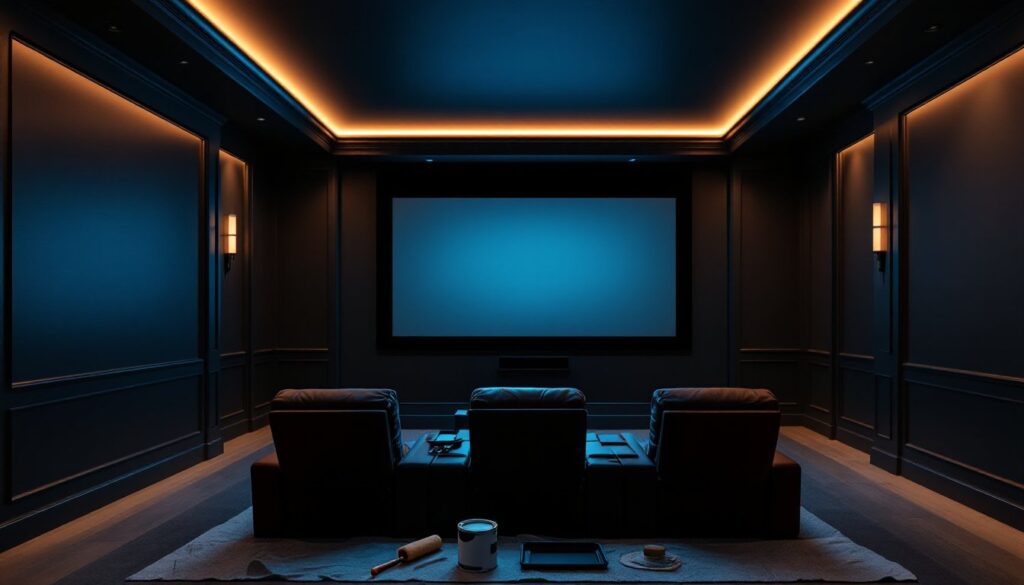
Flat black ceilings are standard in dedicated theaters. They disappear visually, especially when lights are dimmed. If black feels too cave-like, match the ceiling to the wall color. The seamless transition between surfaces makes the room feel larger and eliminates distracting color breaks.
For rooms with coffered or tray ceilings, paint recesses even darker than the main ceiling plane. This adds architectural depth while maintaining light absorption. Use matte or flat finishes exclusively on ceilings, any sheen will create hotspots from recessed lighting.
Trim color is where opinions diverge. Purists paint trim, baseboards, and crown molding the same dark color as walls to eliminate visual interruptions. This approach works best in dedicated theaters. In multipurpose rooms, many homeowners prefer dark gray or charcoal trim as a compromise, it’s less jarring than white but doesn’t demand the commitment of an all-black room.
White trim in a theater is a technical mistake. It reflects light, creates visual distraction, and breaks immersion. If the rest of the house has white trim and repainting feels excessive, consider at minimum painting the trim on the front wall (behind or around the screen) to match the wall color.
Door and window frames should follow the same rule: dark or matching. If the theater has windows, blackout cellular shades or heavy curtains are non-negotiable, but the frames themselves should still be dark to avoid drawing the eye when the shades are down.
Sheen and Finish: What Works Best for Theater Rooms
Sheen is as critical as color. A glossy or satin finish reflects light like a mirror, negating the benefits of a dark color. Flat (matte) paint is the only appropriate choice for home theater walls and ceilings.
Flat finishes absorb light rather than reflecting it, and they don’t create hotspots or glare. Benjamin Moore’s Regal Select Matte and Sherwin-Williams’ Emerald Matte both offer excellent coverage and durability in low-sheen formulas. Flat paint has historically been harder to clean, but modern formulas are scrubbable and hold up well in low-traffic spaces like theaters.
Eggshell and satin finishes are too reflective for theater use. Even a slight sheen becomes noticeable in a dark room with a bright screen. Reserve these finishes for hallways, trim in other rooms, or areas where washability is a higher priority than light control.
Some manufacturers offer specialized theater paints with enhanced light-absorbing properties. These are typically ultra-matte formulas with added pigments to reduce reflectance. Screen Goo and Behr’s Ultra Pure Black are examples. They’re overkill for most home setups, but they’re worth considering for dedicated theaters with high-end projection systems.
Coverage and coats: Dark colors, especially blacks and deep blues, often require three coats for even coverage, particularly over lighter existing paint. Primer is essential, use a gray-tinted primer to reduce the number of finish coats needed. Standard white primer will require additional topcoats and may allow lighter colors to bleed through.
Paint coverage averages 350–400 square feet per gallon for most premium paints, but dark colors and matte finishes may cover less. Budget for 10–15% extra to account for multiple coats and touch-ups.
Color Mistakes to Avoid in Your Home Theater
Using light or medium colors is the most common error. Beige, light gray, or pastels might match the rest of the home, but they destroy contrast and create a washed-out viewing experience. If the room serves multiple functions and an all-dark scheme feels too drastic, paint only the front wall and ceiling dark, and use medium tones on side and rear walls.
Choosing the wrong sheen is a close second. Satin, semi-gloss, or glossy finishes turn walls into reflective surfaces. Even “low sheen” eggshell paints reflect enough light to cause problems. Stick with flat or matte, no exceptions.
Ignoring the ceiling undermines the rest of the color scheme. A white ceiling reflects light from the screen back into the room, reducing contrast and creating a distracting glow. Paint it dark or accept compromised performance.
Skipping primer or using the wrong type leads to uneven coverage and visible streaks. Dark paints are unforgiving, every imperfection shows. Use a gray-tinted primer, and apply it evenly with a roller. Cut in edges carefully: dark colors highlight sloppy brushwork.
Painting without proper surface prep guarantees poor results. Patch holes, sand rough spots, and clean walls thoroughly before priming. Dark matte finishes emphasize texture, so any bumps, divots, or old paint drips will be visible. This is especially true in rooms with directional lighting from sconces or LED strips.
Overlooking sample testing is risky with bold colors. Paint large sample swatches (at least 2′ x 2′) on different walls and view them at different times of day and with the lights dimmed. Colors shift dramatically depending on lighting conditions, and interior design trends often encourage lighter shades that don’t translate well to theater spaces.
Finally, forgetting about ventilation and drying time can extend the project unnecessarily. Dark paints often contain more pigment and take longer to cure fully. Use fans, crack windows, and allow 24–48 hours between coats. Rushing leads to roller marks, uneven sheen, and frustration.